
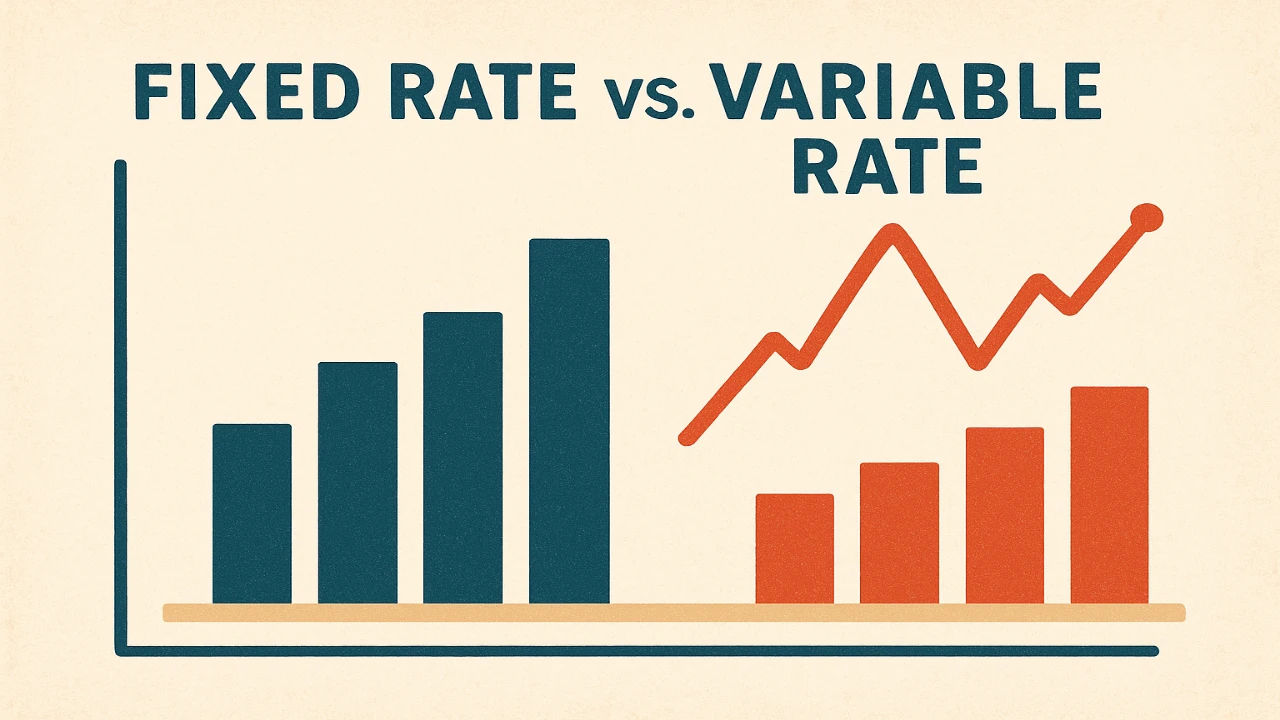
Understanding the distinction between fixed and variable interest rates is essential for making informed financial decisions. Whether you’re applying for a mortgage, a personal loan, or managing investments, knowing how these rates function can impact your financial stability and planning.
This guide breaks down the core differences, helping you grasp which option suits your needs best.
Quick Navigations
What Are Fixed Interest Rates?
Fixed interest rates remain constant throughout the duration of a loan or investment. Once agreed upon, your interest rate does not change regardless of market fluctuations.
- Stability and Predictability: Fixed rates offer predictable payments, making budgeting easier.
- Common Uses: Frequently used in mortgages, auto loans, and personal loans.
- Interest Rate Lock: The rate is locked in at the time of signing the agreement.
- Protection Against Market Fluctuations: You are shielded from rising interest rates.
- Potential Downsides: If market rates decrease, your rate remains higher than current rates.
- Long-Term Planning: Ideal for borrowers seeking stable monthly payments over years.
- Cost Implications: Usually start with slightly higher initial rates compared to variable options.
Fixed interest rates are particularly advantageous when economic forecasts suggest rising interest rates. They provide peace of mind by eliminating uncertainty related to fluctuating costs over time.
What Are Variable Interest Rates?
Variable interest rates fluctuate based on market conditions or benchmark indices such as LIBOR or SOFR. These changes can occur at predetermined intervals or irregularly.
- Initial Lower Rates: Often start lower than fixed rates, offering potential savings upfront.
- Market-Driven Changes: Rates adjust according to changes in underlying benchmarks.
- Flexibility: Suitable for short-term loans or borrowers who anticipate decreasing or stable rates.
- Unpredictable Payments: Monthly payments can increase or decrease over time.
- Risk Factors: Borrowers face uncertainty if interest rates rise sharply.
- Potential Savings: If market rates decline, borrowers benefit from reduced payments.
- Common Uses: Used in adjustable-rate mortgages (ARMs), credit cards, and some student loans.
Variable interest rates are attractive when market conditions favor lower borrowing costs or when borrowers plan to repay their loans quickly before significant rate increases occur.
How Do Fixed and Variable Rates Differ?
The primary difference lies in their response to market changes and payment stability.
- Rate Stability vs. Flexibility: Fixed offers stability; variable offers flexibility based on market trends.
- Predictability of Payments: Fixed payments remain unchanged; variable payments fluctuate.
- Risk Exposure: Fixed rates minimize risk; variable exposes borrowers to rate hikes.
- Cost Over Time: Fixed may be more expensive initially but safer long-term; variable can be cheaper initially but unpredictable.
- Economic Impact: Fixed is preferable during volatile markets; variable benefits from stable or falling markets.
Fixed-rate loans are designed to provide certainty for borrowers who prefer consistent payments without surprises. Conversely, variable-rate loans are better suited for those willing to accept risk for potential savings if interest rates drop. The choice depends largely on individual financial goals and market outlooks.
Helpful Examples:
- Fixed-rate mortgage: A homeowner pays $1,500/month fixed for 30 years regardless of market shifts.
- Variable-rate credit card: Monthly minimum payments fluctuate with prevailing interest charges based on prime rate changes.
Choosing between fixed and variable depends on risk appetite and economic forecasts. Understanding these distinctions helps tailor your financial strategy effectively.
Pros and Cons of Fixed Interest Rates
Fixed interest rates come with distinct advantages and disadvantages that influence borrowing decisions.
Advantages:
- Consistent monthly payments facilitate easy budgeting
- No surprise increases due to market shifts
- Greater long-term financial security
- Easier to compare offers since rate remains constant
Disadvantages:
- Typically higher initial interest rate
- Missed opportunity for savings if market rates fall
- Less flexibility if early repayment options involve penalties
In essence, fixed-rate loans suit conservative borrowers prioritizing stability over potential savings.
Pros and Cons of Variable Interest Rates
Variable interest options also have unique benefits and drawbacks worth considering:
Advantages:
- Usually start with lower initial rates
- Potential for decreased payments if market interest declines
- Greater flexibility in certain loan types
- Suitable for short-term borrowing strategies
Disadvantages:
- Uncertainty about future payment amounts
- Risk of significantly higher costs if interest rates rise sharply
- Harder to budget long-term finances accurately
Flexible by nature, variable-rate loans appeal to borrowers comfortable with risks seeking possible cost reductions through favorable market movements.
When Should You Choose Fixed vs. Variable?
Deciding between fixed and variable depends on several factors including financial goals, risk tolerance, and economic outlook:
Opt for Fixed Rates If:
- You prioritize payment stability
- You expect interest rates will rise
- You plan long-term borrowing
- You want predictable monthly expenses
Choose Variable Rates If:
- You anticipate declining or stable interest environments
- You’re comfortable with payment fluctuations
- You seek lower initial costs
- You’re planning shorter loan terms
Above all, evaluate your financial situation along with current economic trends before choosing an option that aligns with your risk appetite.
Final Thoughts on Fixed vs. Variable Interest Rates
Understanding the key differences between fixed and variable interest rates empowers you to make smarter borrowing choices. Each has its merits depending on your financial objectives and comfort level with risk. Carefully assess current market conditions alongside your personal circumstances to select the most advantageous option.
Remember that both types of interest have roles in various financial strategies—knowing when each applies can enhance your overall financial health.
FAQs About Fixed and Variable Interest Rates
- Which type of interest rate is better for long-term mortgages?
Fixed rates are generally preferred as they provide payment stability over decades. - Can I switch from a fixed to a variable rate?
Some lenders allow conversion options; check your loan agreement for specifics. - Are variable interest rates riskier than fixed?
Yes, because they expose borrowers to potential increases in payments if market rates rise sharply. - Do fixed-interest loans cost more overall?
Not necessarily; they often start higher but may save money if market rates increase later. - What factors influence whether I should choose fixed or variable?
Consider your risk tolerance, loan term length, economic forecasts, and personal financial goals.
This comprehensive overview clarifies the fundamental differences between fixed and variable interest rates while providing practical guidance for making informed borrowing decisions.