
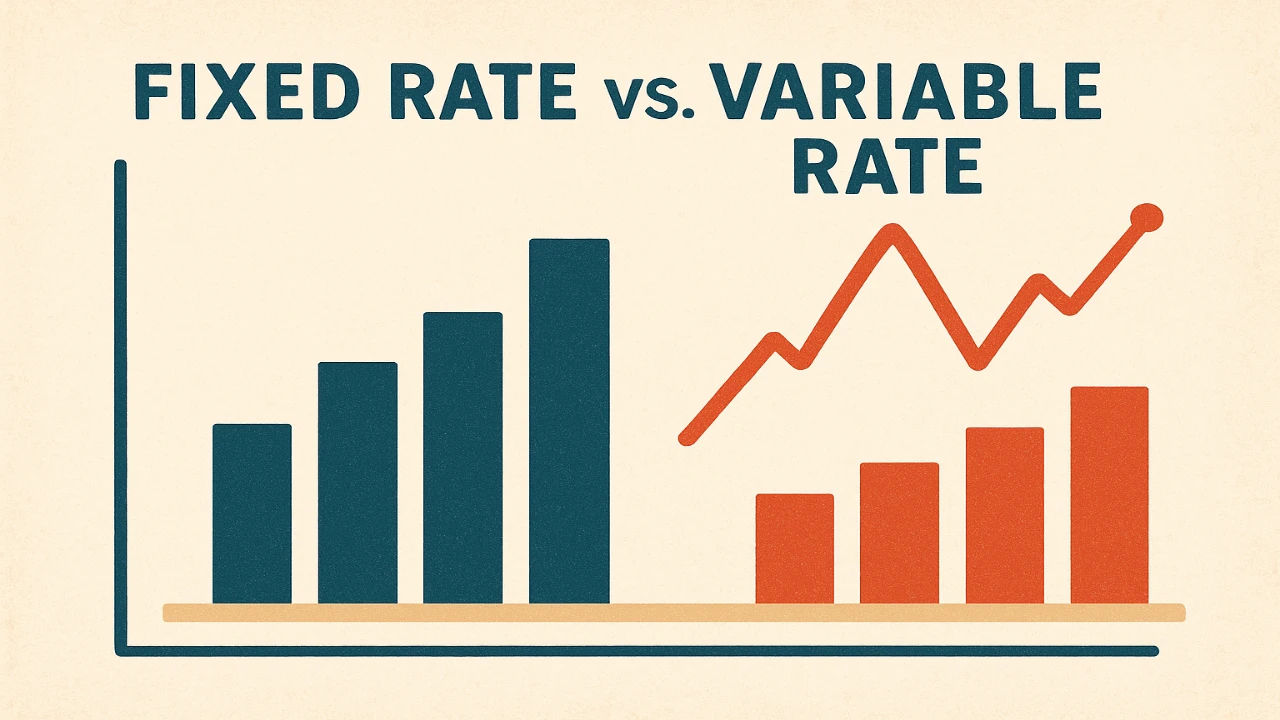
Understanding the nuances of interest rates is crucial when making significant financial decisions, such as taking out a mortgage, refinancing a loan, or investing. Among the most common types are fixed and variable interest rates, each with distinct characteristics that can impact your financial stability and costs over time.
This article explores the key differences between fixed and variable interest rates, supplemented with real-world examples to help you make informed choices tailored to your financial goals.
Quick Navigations
What Are Fixed Interest Rates?
Fixed interest rates are loans or financial products where the rate remains constant throughout the entire term. This consistency provides borrowers with predictable payments, shielding them from fluctuations in market interest rates. Fixed rates are typically used in mortgages, auto loans, and personal loans when borrowers prioritize stability and budgeting certainty.
A fixed-rate loan offers peace of mind because your monthly payments stay the same regardless of economic changes or market shifts. For example, if you secure a 30-year fixed mortgage at 3.5%, your payment will remain unchanged for three decades. This stability makes it easier to plan long-term finances without worrying about rising interest costs.
In practice, fixed interest rates are particularly advantageous during periods of declining or volatile interest rates since they lock in your rate at the outset. However, if market rates fall significantly after you lock in a fixed rate, you might miss out on potential savings unless you refinance.
Key features of fixed interest rates include:
- Consistent monthly payments over the loan term
- Predictability and ease of budgeting
- Typically higher initial rates compared to variable options
- Less advantageous if market rates decline significantly
- Suitable for risk-averse individuals who prefer financial stability
In summary, fixed interest rates offer security and simplicity but may come at a premium compared to variable options. They are ideal for those who prioritize stability over potential savings from falling market rates.
What Are Variable Interest Rates?
Variable interest rates fluctuate over the life of a loan based on an underlying benchmark index. These rates can change periodically—monthly, quarterly, or annually—depending on movements in the reference rate. As a result, your payments can increase or decrease over time.
Variable interest rate loans are often initially offered at lower rates than fixed-rate loans, making them attractive for borrowers seeking short-term savings or who anticipate falling or stable market conditions. For example, an adjustable-rate mortgage (ARM) might start with an introductory rate of 2.75% for five years before adjusting annually based on the prevailing index plus a margin.
The primary advantage of variable interest rates is their potential to decrease if market conditions favor lower borrowing costs. Conversely, they also pose risks; if interest rates rise sharply, your payments could increase substantially, impacting household budgets.
Key features of variable interest rates include:
- Payments that fluctuate based on market conditions
- Potential for lower initial rates
- Increased exposure to interest rate risk
- Flexibility for early refinancing or sale
- Suitable for borrowers comfortable with uncertainty
To mitigate risks associated with rising interest rates, some lenders offer caps on how high your payments can go within certain periods. Understanding these features helps borrowers decide whether a variable rate aligns with their financial plans.
Comparing Fixed and Variable Interest Rates
Choosing between fixed and variable interest rates involves weighing several factors related to predictability versus potential cost savings.
| Aspect | Fixed Rate | Variable Rate |
|---|---|---|
| Payment Stability | Yes | No |
| Initial Cost | Usually higher | Usually lower |
| Risk Exposure | Low | High |
| Potential Savings | Limited | Possible higher savings |
| Suitability | Conservative investors | Flexible investors |
It’s important to assess personal risk tolerance when selecting an interest rate type:
- Risk-averse individuals may prefer fixed-rate products for budget certainty.
- Those comfortable with fluctuations might opt for variable-rate options to capitalize on potential savings.
Additionally, economic forecasts play a critical role; if experts predict rising interest rates soon, locking in a fixed rate could be prudent. Conversely, if market analysts expect stable or declining rates ahead, choosing a variable rate might maximize benefits over time.
Examples Demonstrating Fixed vs Variable Rates
Real-world scenarios exemplify how these interests work in practice:
- Home Buying: Sarah purchased her home with a 30-year fixed mortgage at 3.75%. Her monthly payment remains steady despite fluctuating economic conditions. Meanwhile, Mark opted for an adjustable-rate mortgage starting at 2.5% which adjusted upward after five years as market rates increased from 2% to 4%. Mark benefited from lower initial payments but faced higher costs later due to rising interest rates.
- Refinancing Strategies: During an economic downturn where central banks cut interest rates aggressively, homeowners with variable-rate mortgages often see their monthly bills decrease promptly. Conversely, those locked into fixed-rate mortgages maintain consistent payments regardless of broader monetary policy shifts.
These examples highlight how individual circumstances and economic trends influence whether fixed or variable options are more beneficial.
Factors Influencing Your Choice Between Fixed and Variable Rates
When deciding between these two types of interest rates, several factors should guide your choice:
- Economic Outlook: Anticipated changes in market interest rates can sway preference towards either option.
- Financial Stability: Those prioritizing predictable expenses tend toward fixed-rate products.
- Loan Term Length: Short-term loans might favor variable options due to limited exposure duration.
- Risk Tolerance: Comfort level with payment fluctuations influences decision-making.
- Market Conditions: Current economic climate affects initial rate attractiveness and future variability.
Understanding these elements enables consumers to tailor their borrowing strategies effectively.
Fixed Or Variable Rates: Which Is Right For You
Choosing between fixed and variable interest depends on personal financial goals and current economic insights:
- Assess your risk tolerance—can you handle potential payment increases?
- Consider your timeline—are you planning to keep the loan long-term or sell soon?
- Evaluate current market trends—are forecasted interest rate hikes imminent?
- Calculate total potential costs—including possible future increases—to compare options accurately.
- Consult financial advisors or use online calculators designed for this purpose.
- Review terms thoroughly—look for caps on adjustable-rate products that limit maximum payments.
- Think about flexibility—do you need options like refinancing easily if circumstances change?
Following these steps ensures an informed decision aligned with your overall financial strategy.
Impact Of Market Changes on Fixed vs Variable Rates
Market fluctuations directly influence both types of interests:
- Fixed-interest loans remain unaffected by short-term volatility but may become less competitive if market rates decline significantly after locking in.
- Variable-interest loans respond immediately to changes; thus, they benefit when markets trend downward but pose risks during upward shifts.
- Economic indicators such as inflation reports and central bank policies serve as guides predicting future movements affecting both options’ attractiveness.
Being aware of macroeconomic signals allows borrowers to adapt their strategies accordingly—for example:
- Locking into fixed when expecting rising inflation.
- Opting for variables when anticipating stable or decreasing interest environments.
This dynamic underscores why ongoing monitoring is essential regardless of initial choice.
FAQs (Frequently Asked Questions)
1. What is the main difference between fixed and variable interest rates?
A fixed interest rate stays the same for the entire loan term, giving predictable monthly payments. A variable interest rate changes over time based on a benchmark index, which means your payments can rise or fall depending on market conditions.
2. Which is better: a fixed or variable interest rate?
Neither option is universally better; it depends on your financial goals and risk tolerance. Fixed rates are ideal for people who want stable, predictable payments, while variable rates may offer lower initial costs but come with the risk of future increases.
3. When should I choose a fixed interest rate?
Choose a fixed rate if you want payment stability, expect interest rates to rise, or prefer long-term budgeting certainty. Fixed rates are especially suitable for mortgages and long-term loans.
4. When is a variable interest rate a good option?
A variable rate is beneficial if market rates are stable or expected to decrease. It is also ideal for borrowers planning to sell, refinance, or pay off the loan before major rate adjustments occur.
5. How do market changes affect fixed and variable interest rates?
Fixed rates remain unchanged regardless of market conditions, while variable rates adjust based on economic indicators like inflation, central bank policies, and benchmark indexes such as SOFR. This means variable-rate payments may increase or decrease over time.
Conclusion
Choosing between fixed versus variable interest rates requires careful consideration of personal circumstances alongside macroeconomic forecasts. Both options offer unique benefits aligned with different risk profiles and financial objectives—for some individuals seeking stability above all else; others aiming for maximum potential savings may lean toward variables despite inherent risks.
By understanding key differences through real-world examples and evaluating relevant factors such as market trends and personal comfort levels, consumers can make strategic decisions suited to their needs. Remember that flexibility exists; refinancing options often allow adjustments down the line should circumstances change dramatically.